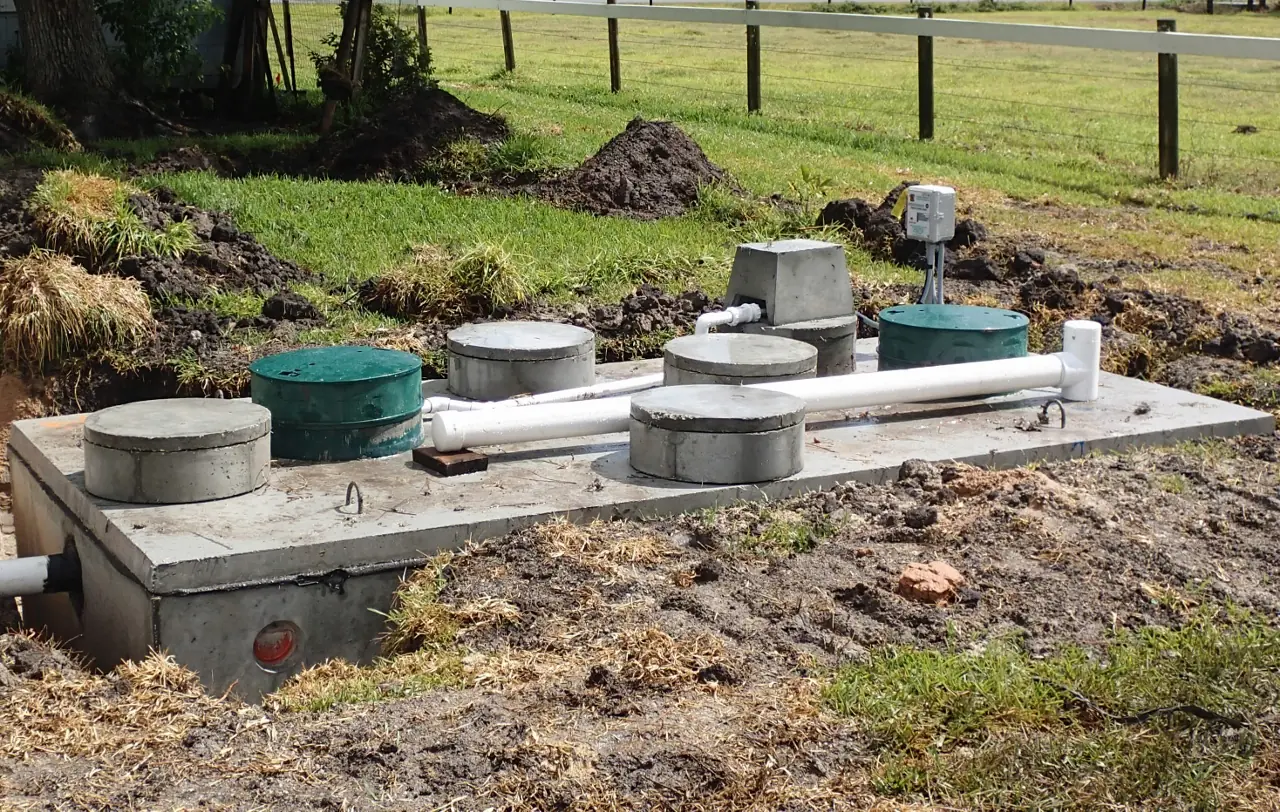
What types of septic systems are used in Alabama?
Alabama’s rules sort the types of septic systems into two groups: conventional and engineered. A conventional septic system feeds trenches dug in natural soil and needs no engineer design. Every other type is engineered, including mound, drip irrigation and low pressure pipe systems.
The soil tests on your lot usually decide which group it falls in. We handle conventional septic system installation across Northeast Alabama from our base in Piedmont. When a lot needs an engineer, we provide engineered septic system installation built to the engineer’s plan. Every estimate is free.
How does Alabama sort the types of septic systems?
Alabama’s septic rules are Chapter 420-3-1, Onsite Sewage Treatment and Disposal. No installation or repair begins until the county health department issues a Permit to Install (Repair). The chapter splits onsite sewage systems into two kinds.
Under Rule .04(23), a conventional system’s septic tank sends water into a drain field without pressure. The trench bottom and sidewalls sit completely in unaltered natural soil. The trench bottom is no deeper than 60 inches below the natural ground surface. The rule says such systems do not require an engineer design.
Rule .04(36) defines the engineered system: every system that is not conventional and requires engineer design. Its list names controlled fill mound systems, drip irrigation and low pressure pipe (LPP). It also names non-proprietary uniform distribution and constructed wetlands. Any tank and field where part of the field rises above the natural soil surface is engineered too.
| System type | Alabama group | What puts it there |
|---|---|---|
| Gravel or chamber trench in natural soil | Conventional | No pressure, and the trench is no deeper than 60 inches |
| Shallow placement field | Conventional | The field stays in natural soil, with fill on top as cover |
| Low pressure pipe (LPP) | Engineered | Named in Rule .04(36) |
| Controlled fill mound | Engineered | Named in Rule .04(36) |
| Drip irrigation | Engineered | Named in Rule .04(36), and it needs advanced treatment |
| Aerobic treatment unit (ATU) | Either | Conventional only when a permitted proprietary unit feeds a conventional field |
What is a conventional septic system?
EPA defines a conventional system as a septic tank plus a trench or bed drain field. EPA says it is typically installed at a home or small business. The Septic Guide says it runs by gravity, with no pumps, no mechanical components and no electricity required.
The Septic Guide says roughly 70 percent of residential septic installations are conventional systems. EPA describes the classic field as a shallow underground trench of stone or gravel. Alabama also allows permitted disposal products, such as chambers, with appropriate sizing.
EPA says gravelless fields have become a conventional technology replacing gravel systems. Our chamber vs gravel drain field comparison covers how the two differ in Alabama.
Shallow placement still counts as conventional. Rule .57 allows it to overcome soil and site limitations, and the trench stays in unaltered natural soil. Fill goes on top to give at least 12 inches of soil cover. If any part of the field rises above the natural soil surface, the system is engineered.
We build conventional fields as part of drain field installation. Our crews dig them with the company’s own excavation equipment.
When does a septic system need an engineer in Alabama?
Rule .09(1) lists the systems and sites that require a design by an engineer. The list includes these:
- A design flow over 1,800 gallons per day.
- A site whose characteristics prohibit a conventional system.
- A lot smaller than the state’s minimum lot size.
- Slopes over 25 percent in the drain field area.
- Any system that does not meet the definition of a conventional system.
The engineer signs off twice. Under Rule .34, the engineer certifies that the design will meet applicable performance standards. Before the system is approved for use, the engineer certifies the installation on ADPH Form CEP-6.
We build to the engineer’s plan. No part is covered or used until the county health department has had the chance to inspect it. The company holds the Alabama Level II (advanced) onsite wastewater installer license. That state level covers engineered and large commercial onsite systems as well as conventional ones.
How do pump and low pressure pipe (LPP) systems work?
Some systems need a pump to move water from the tank to the field. Alabama’s Rule .27 sets the terms for every effluent pump. The pump has to be able to run submerged, with a check valve to prevent reverse drainage. The system needs a high water alarm on a separate electrical circuit from the pump.
Large fields get pump dosing under Rule .63. A field that needs more than 1,400 linear feet of pipe is split into separate, equal fields. Each one holds 1,000 linear feet of trench or less. Unless the water is first treated to secondary standards, each field is pump dosed at least six times a day.
A low pressure septic system goes a step further. Alabama’s rule describes LPP as small diameter pipe providing low pressure disposal of effluent. Rule .63 says LPP below the natural ground surface can even out the flow across the field. It requires an engineer design from a published manual.
We install pump and dosing systems as part of the systems we build. On an engineered system, the pump and the field go in to the engineer’s plan.
What is a mound septic system?
Alabama calls it a controlled fill mound system. Under Rule .61, when a lot cannot take a conventional system, the county health department may consider a mound plan. A professional engineer directly supervises and certifies the fill and the whole build. The site is evaluated before any fill is placed.
EPA says mounds are an option for shallow soil depth, high groundwater or shallow bedrock. The Septic Guide says effluent is pumped up to an engineered sand mound built above the natural ground surface. EPA adds that mounds require a substantial amount of space and periodic maintenance. The Septic Guide notes they also create a visible raised area in the yard.
What is a drip irrigation septic system?
Rule .04(29) describes it. A drip irrigation system relies on advanced treatment and filtration of the treated water. Small tubes with emitters slowly drip that water into the upper soil. Rule .25(1) requires advanced treatment whenever drip irrigation is used.
Rule .62 sets how it goes in. Drip lines carry at least 6 inches of soil cover and sit no deeper than 12 inches from final grade. Standard spacing for the lines and emitters is 24 inches, with the lines laid level along the contour. Each field or zone is time dosed at least six times a day, and every drip system needs filtration.
EPA says the main advantage is that no large mound of soil is needed. The tradeoff is a large dose tank after the septic tank, plus electrical power. EPA says that adds expense and maintenance.
What is an aerobic septic system?
An aerobic septic system uses an aerobic treatment unit (ATU). EPA says the unit injects oxygen into the treatment tank to boost natural bacterial activity. EPA says ATUs suit homes with smaller lots, inadequate soil conditions or a water table that is too high. It also says regular lifetime maintenance should be expected for ATUs.
Alabama’s rule calls this advanced treatment, and Rule .04(4) says the term may include ATUs. A proprietary unit with an ADPH Product Permit, followed by a conventional field, counts as conventional. Other advanced treatment designs, and any unit feeding a drip field, are engineered.
Some sites leave no choice. Rule .25(1) requires advanced treatment in these cases, among others:
- A design flow over 4,000 gallons per day.
- Less than 6 inches from the ground surface to the seasonal saturated layer the rule calls ASHES.
- Less than 12 inches from the ground surface to hard bedrock.
- Soil that percolates faster than 5 minutes per inch.
- Soil slower than 240 minutes per inch.
- Any drip irrigation system.
ASHES stands for Average Seasonal High Extended Saturation, a layer that becomes saturated at least once in most years. EPA’s alternative systems also include the recirculating sand filter. EPA says sand filters give a high level of treatment for nutrients.
How much does each type of septic system cost?
The Septic Guide’s March 2026 installation cost guide prices each system type installed. Each row gives the guide’s range and where it says that type fits.
| System type | Where The Septic Guide says it fits | Published installed range | Cost guide |
|---|---|---|---|
| Conventional (gravity-fed) | Suitable soil, adequate space, a low water table | $3,000 to $8,000 | The Septic Guide, March 2026 |
| Chamber system | A high water table, or sites where gravel is expensive | $5,000 to $12,000 | The Septic Guide, March 2026 |
| Sand filter system | Challenging soil, environmental sensitivity | $7,000 to $18,000 | The Septic Guide, March 2026 |
| Drip distribution | Shallow soil, irregular lots, limited space | $8,000 to $18,000 | The Septic Guide, March 2026 |
| Aerobic treatment unit (ATU) | Small lots, poor soil, strict treatment requirements | $10,000 to $20,000 | The Septic Guide, March 2026 |
| Mound system | Shallow soil, a high water table, high bedrock | $10,000 to $20,000 | The Septic Guide, March 2026 |
| Engineered or complex system | Sites that fail perc tests, multiple challenges | $15,000 to $50,000 | The Septic Guide, March 2026 |
The Septic Guide’s March 2026 guide adds $5,000 to $15,000 over conventional when a lot fails its perc test. Its chamber row prices a whole system with a chamber field, which Alabama can still class as conventional.
These are published market ranges, never our price. Your lot and its design set the real number. Alabama sizes the tank by bedroom count under Rule .17(5). Our guide to what a septic system costs in Alabama breaks cost down by bedroom count.
How do the soil tests decide which type your lot gets?
The Septic Guide says a soil evaluation and perc test, done before permitting, decide the system type entirely. It calls the perc test result the decision point.
In Alabama, an engineer, land surveyor, geologist or soil classifier licensed in the state completes the site evaluation. In some cases a health department site specialist does it. Before the permit issues, the soil professional or the specialist certifies the soil tests.
The evaluator rates every proposed site on six factors, including soil permeability, depth to bedrock and slope. The most limiting factor decides whether the site suits a conventional system or an engineered one.
We coordinate that testing as part of our septic inspections and perc test work. We handle the permit with the county health department. Our Alabama septic permit and perc test guide walks through each step. Across the line in Northwest Georgia, the county environmental health office works under Georgia’s own septic rules, Chapter 511-3-1.
How do you find out which type fits your lot?
Every range above comes from a published cost guide, and your own lot sets your price. Our three crews dig tanks and trenches with the company’s own excavation equipment. Decades of septic installs sit behind the company.
We look at the site and quote the job for free. Call (256) 453-9003 or request a free estimate.