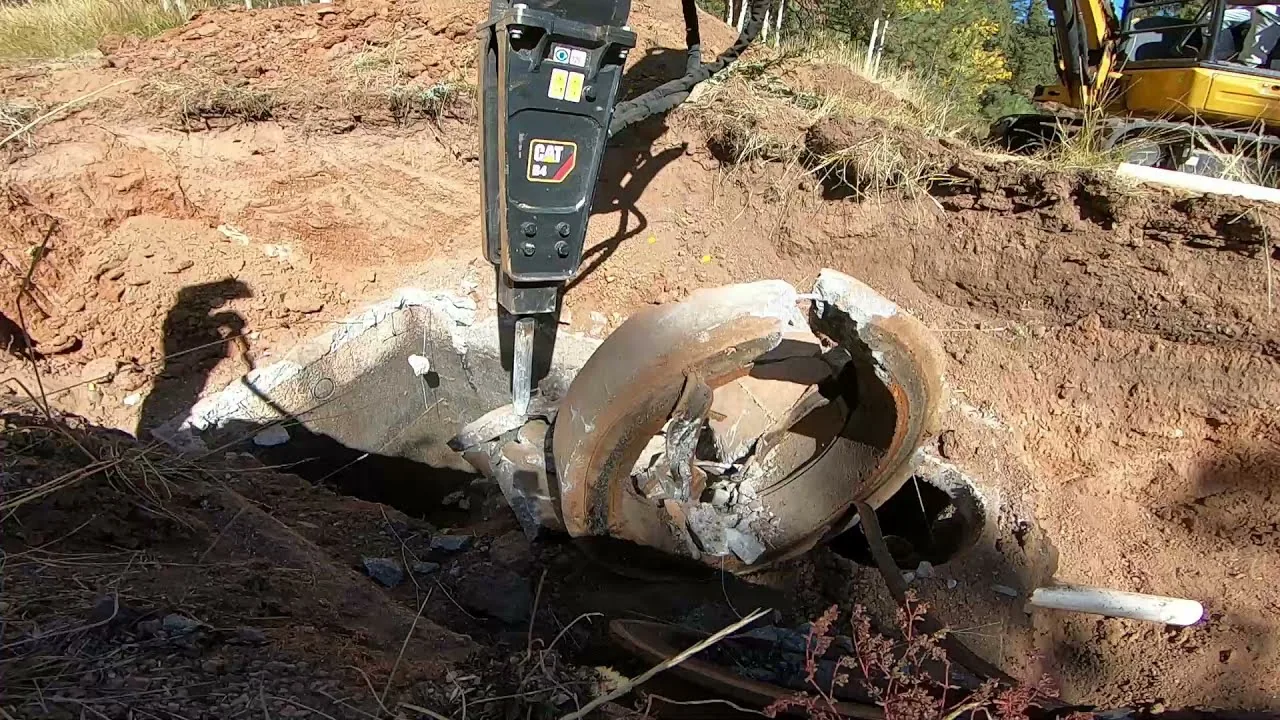
How Much Does Septic Tank Abandonment Cost in Alabama?
The Septic Guide’s October 2026 removal cost guide puts filling an old septic tank in place at $500 to $2,000. The Septic Guide puts full removal of the tank at $1,500 to $6,000. Either way, Alabama rule 420-3-1-.24 says a licensed pumper pumps the tank out first.
These are published market ranges. Your number comes from a look at your own tank and lot. Our crews do the removal or fill work as part of old septic tank removal and replacement across Northeast Alabama. Every estimate is free.
What does septic tank abandonment cost?
Two choices set the price. The tank is filled in place, which The Septic Guide also calls abandonment or decommissioning. Or the tank is dug out and hauled away. The Septic Guide’s October 2026 guide prices both, and Angi’s October 2026 septic system guide prices removal by the hour.
| Item | Published range | Cost guide |
|---|---|---|
| Fill in place, total, with pumping, crushing, fill and capping | $500 to $2,000 | The Septic Guide, October 2026 |
| Full removal, total, with pumping, digging, hauling, backfill and compaction | $1,500 to $6,000 | The Septic Guide, October 2026 |
| Pumping the tank, needed for either choice | $300 to $700 | The Septic Guide, October 2026 |
| Septic tank decommissioning during a sewer conversion | $500 to $2,000 | The Septic Guide conversion guide, October 2026 |
| Old septic tank removal, per hour | $45 to $200 | Angi, October 2026 |
The Septic Guide says removal costs more because of the excavation equipment, hauling, disposal fees and compaction. Angi lists old septic tank removal among the extra costs to plan for with a new septic system.
Pumping is a line of its own in both choices. In Alabama, that step belongs to a pumper licensed by the Alabama Onsite Wastewater Board. The Septic Guide’s October 2026 guide puts pumping at about $300 to $700. Permit fees are not in the table, so check with the county health department for any fee.
What does Alabama require when a septic tank is abandoned?
Rule 420-3-1-.24 says a tank is abandoned when its use is discontinued. The rule also applies when the system cannot be made to comply with the rules. From then on, further use of the tank is prohibited. The rule then lays out the steps:
- An abandoned tank is pumped out by a pumper licensed by the Alabama Onsite Wastewater Board.
- The empty tank may be removed at the property owner’s option, or to make room for new system components.
- If nothing new goes in that spot, the hole left by the removed tank is filled with sand or soil.
- An empty tank left in place is filled with sand or soil.
- The bottom of the tank may be ruptured. The rule allows this step but does not require it.
The Septic Guide’s conversion guide also lists gravel and concrete as fill. Alabama’s rule names sand or soil, so plan on those here.
Older paperwork may cite rule .35. That was this rule’s number before the current rules took effect on February 13, 2023.
The permit question depends on the job. When the old tank goes during a replacement, the new system needs a Permit to Install (Repair). Rule 420-3-1-.06(1) says no installation or repair begins until the county health department issues it. We handle that permit with the county health department.
A tank closed on its own is a different case, such as one left behind after a sewer hookup. The Septic Guide says some places require a separate decommissioning permit. For the Alabama answer on your property, check with the county health department.
Should you remove the old septic tank or fill it in place?
The Septic Guide says the choice comes down to one question: will anything go on top of the tank?
| Fill in place | Remove the tank | |
|---|---|---|
| Alabama rule 420-3-1-.24 | Pumped out by a licensed pumper, then filled with sand or soil | Pumped out by a licensed pumper, then dug out |
| What the rule adds | The bottom of the tank may be ruptured | The hole is filled with sand or soil if nothing new goes there |
| Published total | $500 to $2,000 (The Septic Guide, October 2026) | $1,500 to $6,000 (The Septic Guide, October 2026) |
| Fits when | A lawn or garden stays over the spot | A new tank, an addition, a garage, deck footings or a pool will go there |
| The ground afterward | The Septic Guide says a crushed, filled tank is not a stable base for a foundation | The Septic Guide says the backfill is compacted so the area can support a structure |
Filling in place is the lower cost choice when the yard stays a yard. The Septic Guide says it is the standard approach when nothing will be built on top. A driveway is the gray area. For a tank under a driveway, The Septic Guide points to full removal or an engineer’s sign-off on compacted fill.
Removal fits when the spot is needed. On a replacement, rule .24 lets the empty tank come out to make room for new system components.
The Septic Guide adds a planning tip. If you are unsure what will go there later, ask about removal now. Digging out a tank that was already filled costs more than doing it once.
When does a septic tank have to be abandoned in Alabama?
Four situations bring rule 420-3-1-.24 into play. The first is a replacement system. When the old tank is past repair, a new one goes in and the old tank leaves service.
Our post on how to choose between septic tank repair and replacement covers the warning signs. Our guide to what a septic tank replacement costs in Alabama prices the new tank.
The second is a failed system that cannot be repaired. Rule .24 says the tank is abandoned when the system cannot be made to comply with the rules. If the tank is sound and only a lid or a baffle failed, the job is septic tank repair. The tank then stays in service.
The third is a public sewer connection. Rule 420-3-1-.32(5) covers a system that fails and cannot be repaired. If public sewer is available within 500 feet, the connection to the public sewer shall be made. The old tank’s use is then discontinued, so the abandonment rule applies.
The Septic Guide’s October 2026 septic to sewer conversion guide lists tank decommissioning at $500 to $2,000. It says that step comes after the sewer line is connected.
The fourth is an unused tank on a property. The Septic Guide says old tanks turn up when a house switched to city sewer years ago. They also turn up when a new system was installed and the old tank was never dealt with. Under rule .24, a tank whose use has stopped is abandoned, and its further use is prohibited.
What moves the price of septic tank abandonment?
The Septic Guide lists what pushes the price up:
- Large tanks, or tanks with more than one compartment
- Tight access where equipment can’t reach easily
- Steel tanks that have partly collapsed
- Rock or deep burial
- A high water table
Tank material matters most when the tank comes out. The Septic Guide says a concrete tank costs the most to remove. It is heavy, so it has to be broken up and hauled in pieces. A fiberglass or plastic tank costs the least, since it is light enough to lift out mostly intact.
A steel tank sits in the middle. The Septic Guide says steel is easier to cut and crush, but a corroded tank can collapse during the dig. The same guide says filling in place costs about the same whatever the tank is made of.
Time on the machine adds up. Angi’s October 2026 guide prices old septic tank removal at $45 to $200 per hour. A deep tank or a tight yard means more of those hours.
Timing can bring the price down. The Septic Guide says the job costs less when the equipment is already on site. That happens during a sewer hookup or a new system install. On a replacement, our crews remove the old tank or fill it in place with the company’s own excavation equipment.
Why not leave an old septic tank in the ground as it is?
The Septic Guide says never to leave an old tank empty and buried. It says rotted lids give way without warning, and it calls an open tank a serious fall hazard. It also warns that septic tanks can hold toxic gases, so never climb into a tank.
The Septic Guide says to keep people and pets away from a cracked or missing lid. The same goes for sinking ground over the tank. It suggests covering the area with a sheet of plywood weighted at the edges. Then get the tank dealt with soon.
The Septic Guide says leaving a tank as it is often ends up costing more. It names emergency decommissioning plus whatever damage a collapse causes.
A sale can bring the old tank up too. The Septic Guide says buyers’ inspectors and lenders may ask for proof it was properly decommissioned. It says to save the paperwork, including the pumping receipt. A septic inspection shows the condition of the system before you buy or sell.
What should a septic tank abandonment quote include?
The Septic Guide’s quote checklist is a good start. Ask each contractor:
- Is pumping included, and is the pumper licensed? In Alabama, the rule calls for an AOWB-licensed pumper.
- Is the tank being filled in place or removed, and why?
- What fill goes in? Alabama’s rule names sand or soil.
- Are disposal and hauling fees in the price?
- Who handles the permit, if the county requires one?
- What happens to the price if the tank is bigger than expected or partly collapsed?
The Septic Guide says a quote far below the rest usually leaves something out. It names the permit and the fill among the usual gaps. On a replacement, old tank removal or fill is part of our septic system replacement work.
How do you get a real number for an old septic tank?
Every range above comes from a published cost guide, and your tank and lot set the final number. The company holds the Alabama Level II (advanced) onsite wastewater installer license. That state level covers engineered and large commercial onsite systems as well as conventional ones.
Three crews and decades of septic installs sit behind the company. When an old tank is part of a septic system replacement, a licensed pumper pumps it out first. Our crew then removes the tank or fills it in place. We handle the permit with the county health department.
We work across Northeast Alabama. We look at the site and quote the job for free. Call (256) 453-9003 or request a free estimate.